Don't spend 3 years to learn what you don't need
Learn career-specific German language skills engineered for technical professionals. Focused. Efficient. Career-ready.
The specialized approach that transformed medical German is now available for engineers.
German government funds specialized programs that prepare medical staff for hospitals in just 6 months. Yet engineers face a critical gap - no such focused training exists for technical careers. Until now. We've created the first German course specifically engineered for technical professionals.
Faster professional fluency
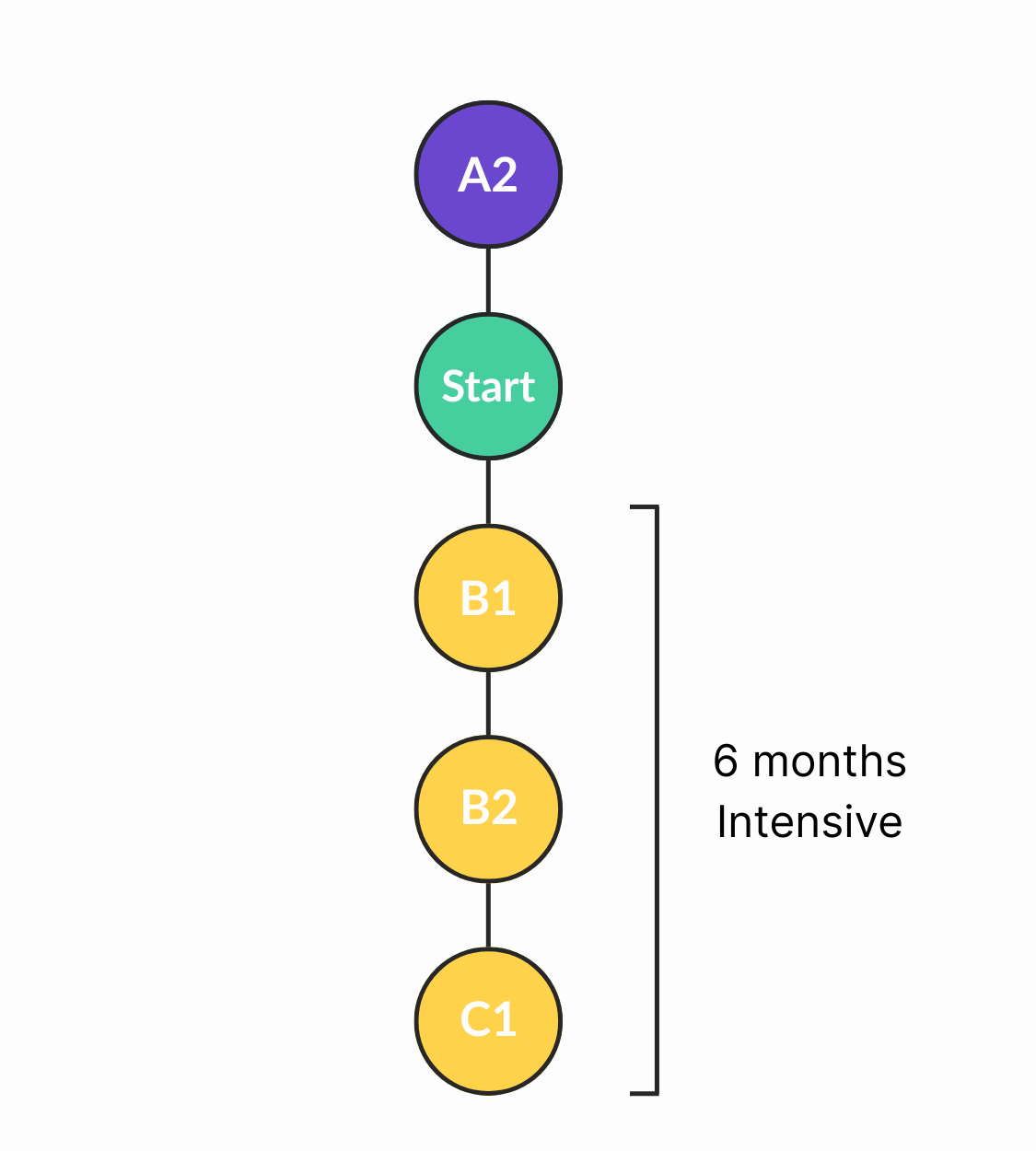
Reach workplace-ready language proficiency in 6 months instead of the typical 3 years with traditional German courses.
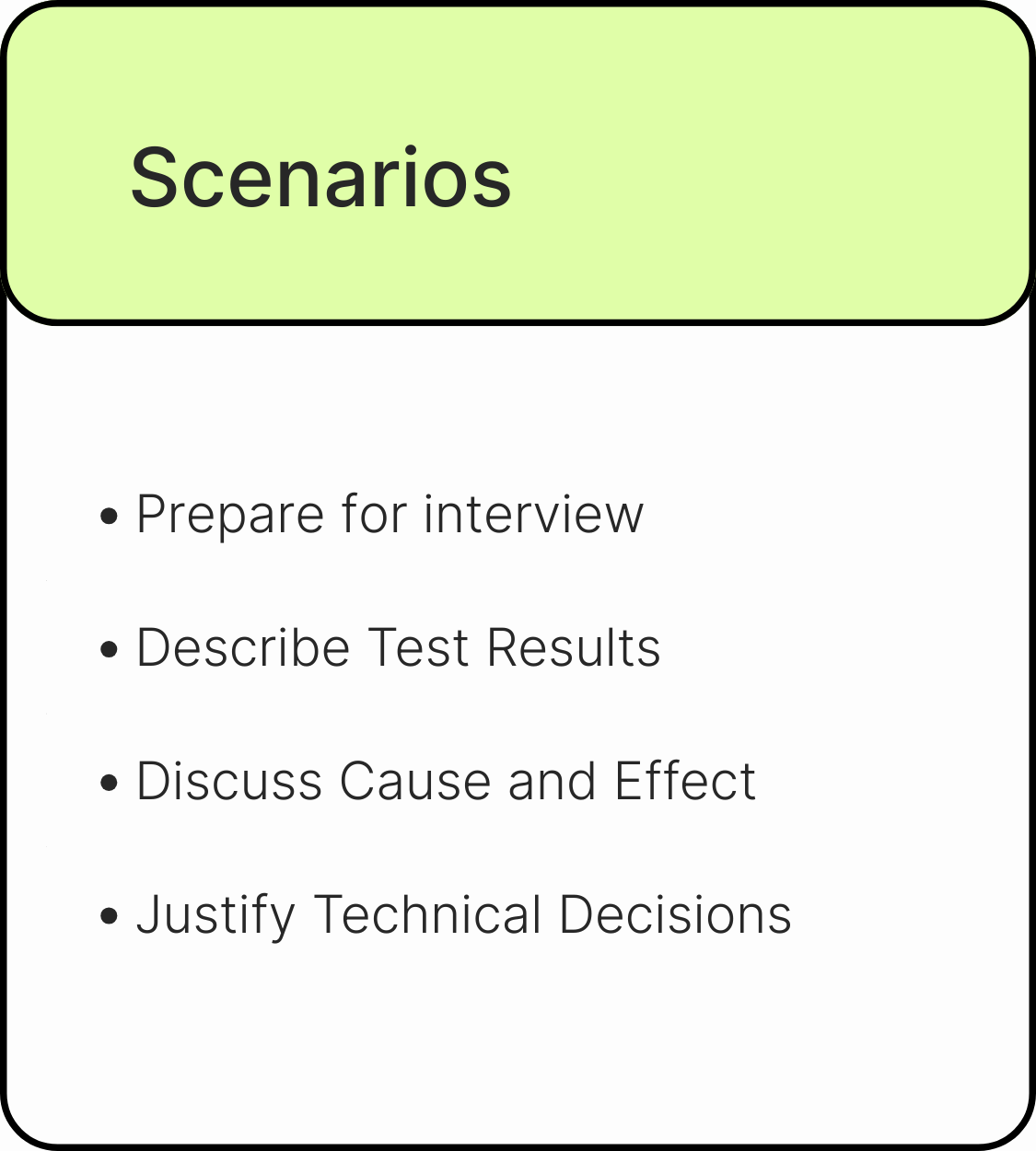
Workplace specific senarios
We deliver technical vocabulary, communication patterns, relevant grammer, and senario based learning, taking you from beginner level to being able to communicate.
You need beginner german and 6 months
You can enroll in the course if you have completed the A2 level. We guide you through all the engineering-relevant German skills required for B1, B2, and C1 levels. By focusing on essential content, we condense 3 years of learning into just 6 months by excluding irrelevant German topics.
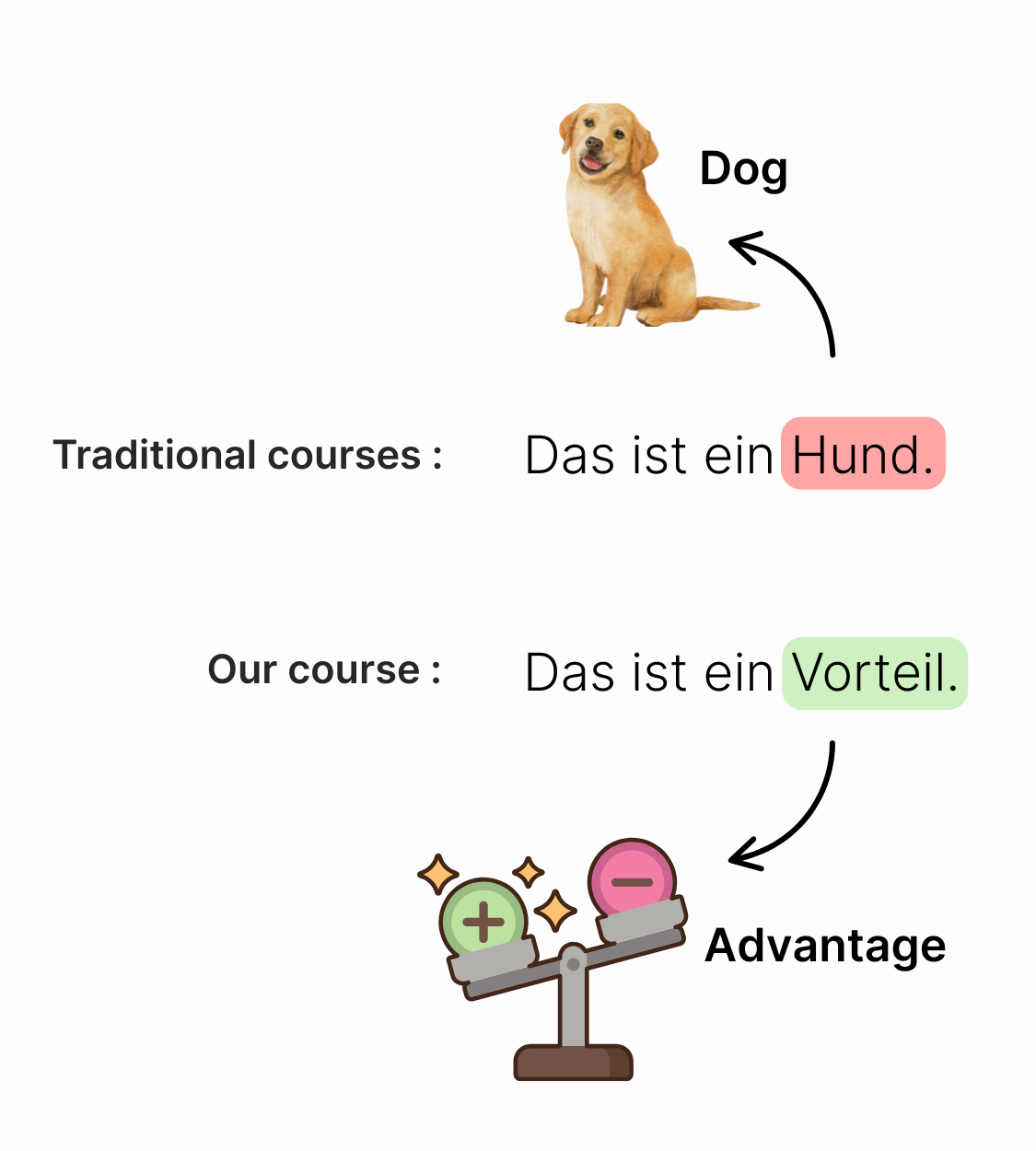
Learn vocabulary that traditional courses will not teach
At work, you won't be discussing topics like Weather, Culture, or Traveling. Instead, you'll focus on Problems and Solutions, Justifying What You Developed, Making Requests and Proposals, and much more. So, it's important to learn what really matters.
Fluency through sentence pattern recognition
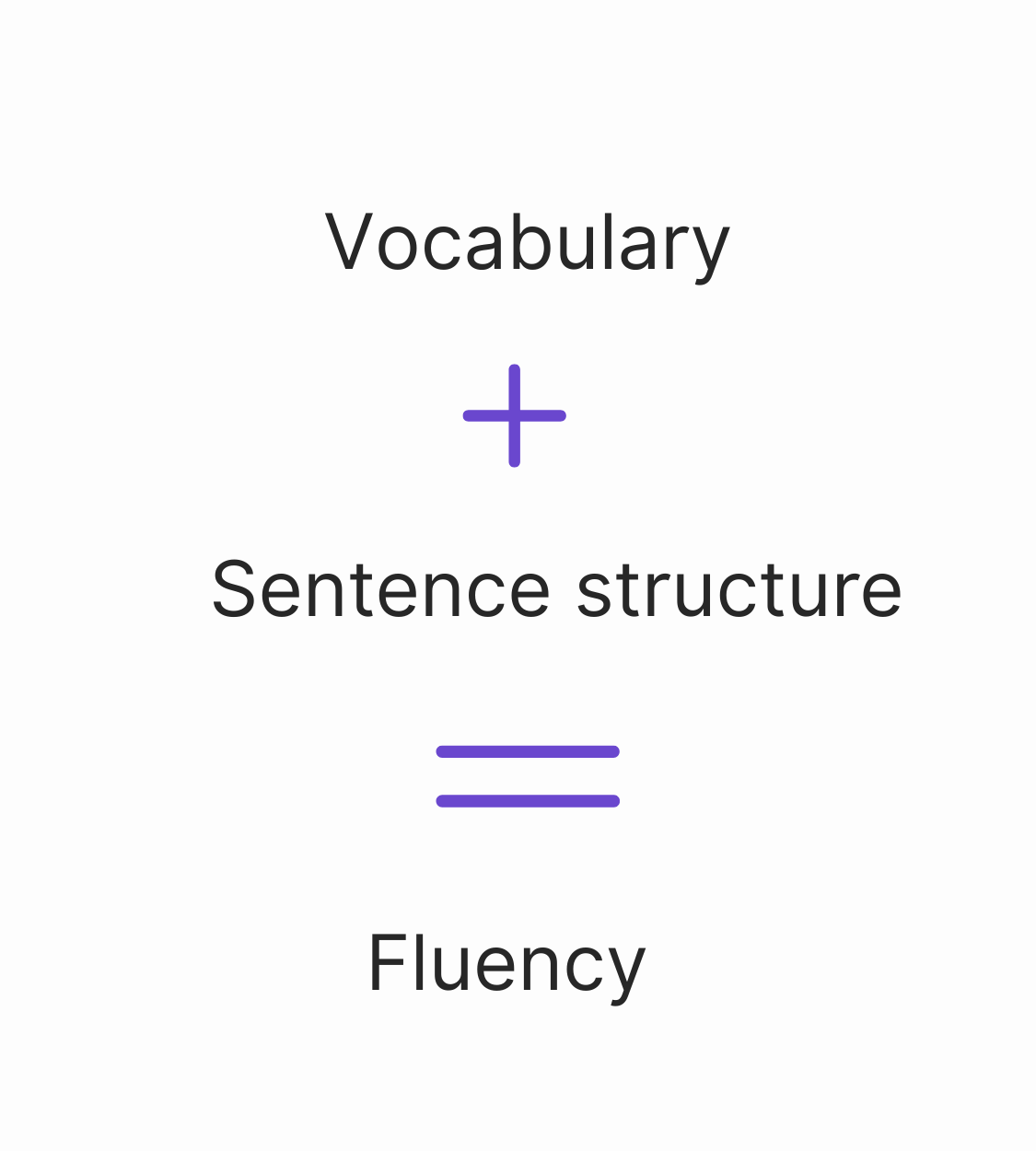
We provide a conversational toolbox for over 600 engineering use cases. For example:
- Want to give an opinion? Use "meiner Meinung nach..."
- Want to give a reason? Use "...weil..."
- Want to talk about dependency? Use "...ist abhängig von..."
This way, you'll have the right structure for every situation at work.
Scenario based learning from real life engineering conversations
We focus on scenario-based learning by breaking down real-life conversations, such as how to express agreement, endorse ideas, describe test results, and discuss the feasibility of proposed technical solutions.